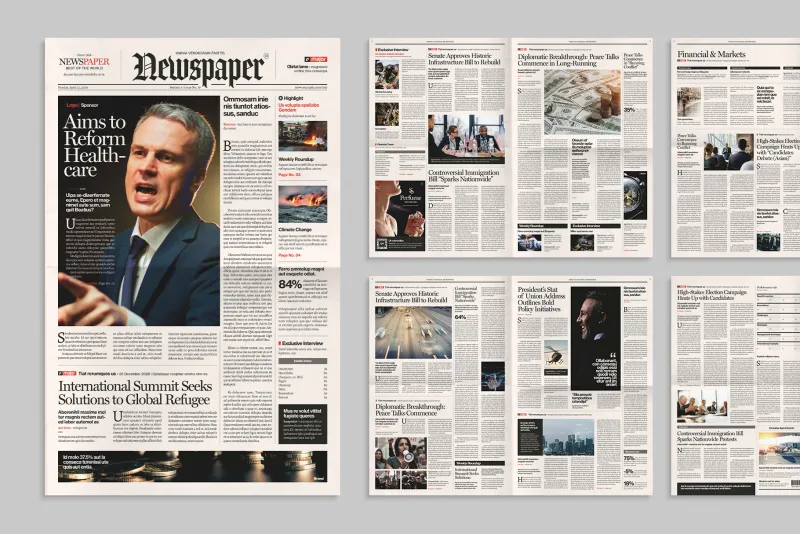
The Evidence in the Frame: A Metadata Review for Visual and Multimodal Search

Photo: Farid mernissi, CC BY 4.0, via Wikimedia Commons
Image optimization has long been treated as a final pass: add alt text, compress the file, publish. That approach no longer matches how visual search and multimodal answer systems evaluate imagery. In 2026, a photo is not only a file on a page. It is a package of evidence: the filename, the embedded metadata that survives the content management system, the visible caption, the surrounding prose, the rights information, and the image sitemap entry that tells crawlers where the asset lives. For US news and e-commerce publishers, the gap between a well-captioned photo and a bare file can affect whether an image is understood, cited, or surfaced at all.
This audit is deliberately narrower than a full technical SEO review. It focuses on the image record and the page context that disambiguates it. The goal is not to stuff keywords into captions. It is to make each high-value image legible to machines and defensible to readers.
Begin with the file, not the tag
Alt text remains necessary, but it is one field in a larger record. Start with the file itself. Human-readable filenames still help, especially for large catalogs and news archives. A name such as us-capitol-sunset-2026.jpg carries more signal than IMG_4471.jpg, though neither replaces a caption. Check that the image URL is stable, crawlable, and not hidden behind a script that only runs after user interaction. Lazy-loading is common and often appropriate, but confirm that the image source appears in the rendered HTML or in a crawlable fallback.
Next, inspect format and dimensions. Oversized files waste crawl budget and slow pages, but aggressive conversion can strip metadata that your editorial team expected to keep. Many CMS platforms and CDNs remove EXIF and IPTC fields by default. That is not automatically a failure, but it is a fact your audit should record. If rights, credit, or caption fields are being stripped, decide whether the visible page and structured data compensate for the loss.
Treat metadata as four layers
A useful audit separates the image record into four layers. The first is file-level: filename, format, dimensions, file size, and stable URL. The second is embedded metadata: IPTC caption, creator, credit line, copyright notice, and location fields where they exist. The third is page-level: alt text, visible caption, nearby body copy, and structured data such as an ImageObject with a caption or creator. The fourth is index-level: the image sitemap entry, including the image location, caption, title, and license field where supported.
Each layer can fail independently. A news photo may have a strong visible caption but no image sitemap entry. A product image may sit in a clean sitemap but lack any page copy explaining scale, material, or variant. A syndicated photo may carry a creator field in the CMS but display no credit on the page. The audit should sample high-value images and score each layer as present, partial, or missing. That simple matrix is more useful than a single pass or fail grade.
Captions do the disambiguation work
Alt text describes an image for accessibility and basic understanding. Captions and surrounding copy explain why the image matters. For news publishers, the caption should answer who, what, when, and where without forcing the reader to infer from the headline. For e-commerce, the page copy should distinguish the product from similar items: the angle shown, the variant, the scale, and the use case. A photo of a running shoe on a gravel path means something different from the same shoe on a studio background.
Visual and multimodal systems increasingly draw on that surrounding text to interpret an image. A caption that repeats the headline adds little. A sentence near the image that names the location, the event, or the product variant gives the engine a stronger anchor. This is not an invitation to write for crawlers. It is an invitation to write captions that a reader would find useful and that a machine can parse without guessing.
Rights fields are part of the record
Licensing and credit fields deserve more attention than they usually receive. US publishers work with wire services, freelance photographers, syndication partners, and user-generated content. The visible credit line, the copyright notice, and the rights metadata should agree. If an image is licensed for editorial use only, that restriction should be clear in the CMS and, where appropriate, in the page record. Do not rely on an embedded field that your CDN strips. Put the credit where readers can see it, and keep the machine-readable version consistent.
Image sitemaps can carry caption, title, and license information alongside the image URL. Use those fields where your publishing stack supports them, and keep the entries current. A stale sitemap that lists removed images or omits new ones weakens the record. For large catalogs, generate image sitemap entries from the same source of truth as the product page, not from a separate manual list.
A prioritized fix list
Priority one: correct and crawlable. Fix misattributed photos, wrong captions, and images that are blocked from crawling. Confirm that the image URL is present in the rendered page and that the image sitemap includes the asset. These are trust and access issues, not optimization refinements.
Priority two: high-value disambiguation. Rename the worst filenames on top stories and top-selling product pages. Add visible captions and a sentence of surrounding copy where the image is ambiguous. Add or correct ImageObject markup for flagship assets. Ensure credit and license fields match the visible page.
Priority three: backfill and monitor. Backfill metadata for archived images that still receive traffic. Sample 30 images each month across news and commerce. Check the file, the embedded fields, the page context, and the sitemap entry. Log the results and compare them with image search performance and visual referral patterns.
The frame is not the whole story. The record around it is what lets a search system understand the story. Publishers that audit that record now will be better positioned as visual and multimodal answers continue to reshape discovery in 2026.