Gated but Findable: A Paywall Access Matrix for Search Crawlers and Answer Engines
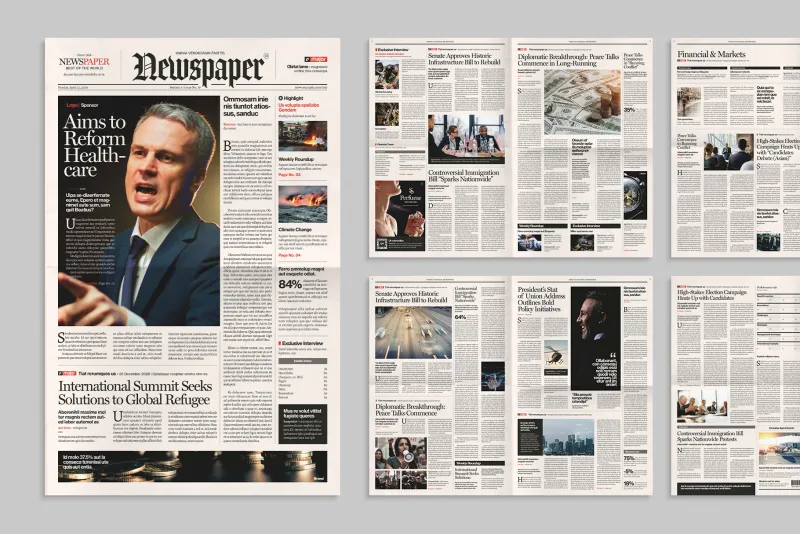
Photo: newspaper subscription paywall on tablet screen close up, via brandpacks.com
Subscription revenue and search visibility are not natural allies. In 2026, a US publisher can meter an article for a reader and still serve a crawler a different experience — sometimes by design, sometimes by accident. The compliance question is not whether to gate content, but which gates are open to which agents, and whether the signals a publisher sends match the access it actually grants.
Google retired First Click Free in 2017. The replacement is a sampling model paired with paywall structured data, not a blanket permission slip for crawlers to bypass the wall. Publishers that still rely on user-agent exceptions to reproduce the old behavior risk being classified as cloaking. The safer approach is to document every access decision and test it against the markup that search engines actually read.
Inventory the access surface before adjusting the wall
Crawler access is no longer a binary choice between Googlebot and everyone else. A modern US newsroom may encounter search crawlers, AI answer crawlers, and AI training crawlers with separate tokens and separate business implications. Googlebot and Bingbot support indexing and snippet generation. AI answer agents such as OAI-SearchBot, PerplexityBot, and Claude-User fetch pages to ground responses. Training crawlers, including GPTBot and Google-Extended, are a different category entirely. Conflating them produces two common errors: blocking an answer crawler that could have delivered a citation, or allowing a training crawler because someone assumed it was part of search.
Start with a written inventory. List every crawler token the site currently allows or disallows in robots.txt. For each one, record the business purpose: indexing, answer citation, training, or none. Then verify that the server actually honors the file. A robots.txt rule that is contradicted by a CDN or a bot-management layer is not a policy; it is a hope.
Structured data is a contract with narrow terms
Paywall markup is not decorative. Google's documentation asks publishers to mark paywalled articles with isAccessibleForFree set to false and to identify the gated section through hasPart and a cssSelector. The selector must point to the part of the page that is behind the wall, not the entire article template. When the selector is wrong, the markup describes a different page than the one a reader sees.
The most frequent failures are mundane. A CMS migration drops the hasPart block. A template update moves the paywall container without updating the selector. An article that was metered last month becomes fully open after a promotion, but the structured data still says it is gated. None of these errors require malice, and none are visible in a standard uptime check. They require a validation routine tied to template releases, not to editorial calendars.
A three-zone access matrix
The matrix below is a decision aid, not a legal opinion. It assumes the publisher wants search visibility, subscription revenue, and a defensible position on AI crawling. Each row should be reviewed against the site's terms of service and any licensing agreements.
| Access zone | Search crawlers | AI answer crawlers | Training crawlers | Required markup |
|---|---|---|---|---|
| Open preview | Allow | Allow | Decide by policy | None |
| Metered body | Allow | Allow if citation is wanted | Usually block | isAccessibleForFree=false plus hasPart |
| Subscriber-only | Allow crawl, limit snippet | Block unless licensed | Block | Paywall markup on the visible preview |
The middle row is where most US publishers live. Metered access works only when the crawler can see the same gated structure that a reader encounters. Serving a full article to Googlebot and a registration wall to a reader is the behavior that search engines have long treated as cloaking. Serving an empty shell to every crawler is a different problem: the page may be indexed, but it will not earn a useful snippet or an AI citation.
The failures that do not show up in a dashboard
Paywall compliance breaks in places that analytics rarely illuminate. Client-side rendering can leave a crawler with an empty article body while a reader sees a fully rendered wall. Server-side personalization can invert the problem, giving a crawler the full text and a subscriber the same text with no gate at all. A/B tests on paywall timing can run for weeks without anyone checking whether the test variant altered the HTML that crawlers receive.
CDN caching deserves its own check. If a cached page was generated for a subscriber, a crawler may receive content that should have been gated. If the cache was generated for an anonymous visitor, a subscriber may see a meter that has already been reset. Neither scenario is a structured-data problem in the narrow sense, but both undermine the claim that the site treats crawlers and readers consistently.
A quarterly review that produces decisions
A useful review ends with a short list of changes, not a long list of observations. Five checks cover most of the risk.
First, fetch a sample of paywalled URLs with the user agents that matter and compare the returned HTML. Record whether the paywall container, the preview text, and the structured data are present. Second, validate the paywall markup after every template release, not only after a reported problem. Third, reconcile robots.txt with the access inventory. If a training crawler is blocked but an answer crawler is allowed, confirm that the server enforces the distinction. Fourth, sample AI answers monthly for citations and snippet accuracy; a paywalled page that is cited with a misleading preview is a brand problem as much as an SEO problem. Fifth, keep an exception log. Every manual override should name the publisher, the crawler, the content class, and the review date.
The decision framework is deliberately small. Ask whether the content needs to be discoverable at all. Ask whether the visible preview gives a reader enough value without substituting for the subscription. Ask which crawler class needs access and whether the site can enforce that answer consistently across robots.txt, server logic, and structured data. When the three answers conflict, the publisher has a policy problem, not a tagging problem.
Paywalls do not have to make a publication invisible. They do have to be legible — to readers, to crawlers, and to the teams that maintain the templates. A matrix that maps access to intent is more useful than a wall that nobody can explain.